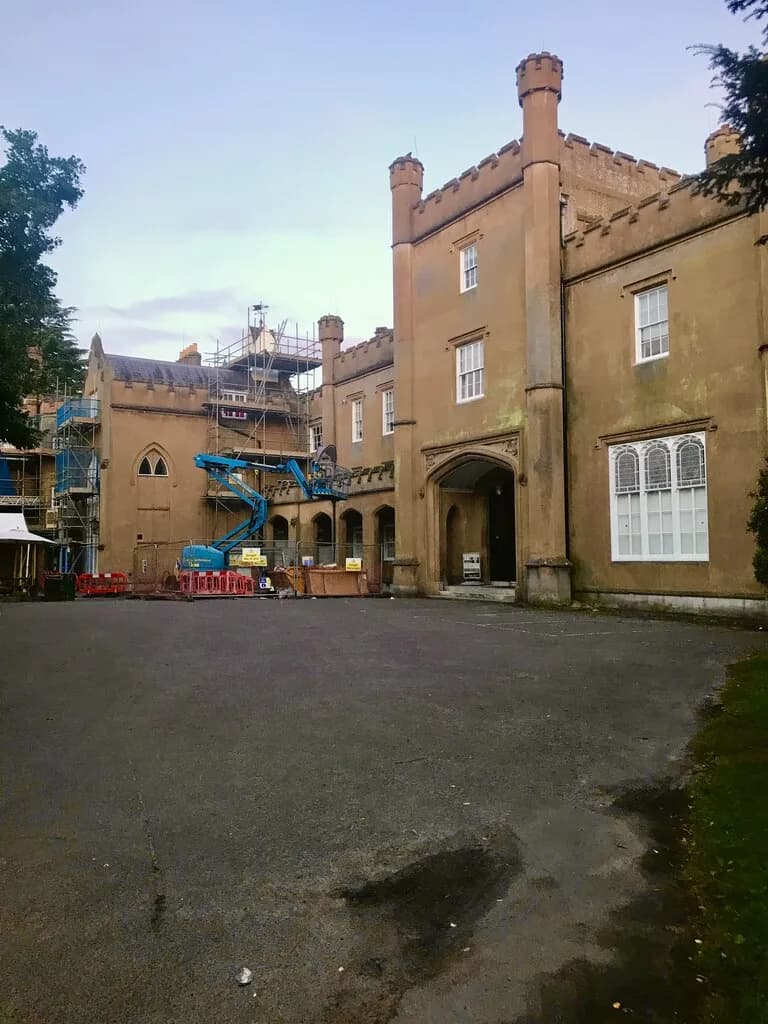
From the rolling downlands of Epsom emerged a family whose influence would span the Atlantic and define one of the original Thirteen Colonies. Woodcote Park, the Grade II* listed mansion that has stood near the town for over three centuries, served as the English seat of the Calvert family, the Barons Baltimore, who governed the colony of Maryland for nearly a century and a half.
The Calvert Connection
The estate came into the Calvert family through a bequest from Elizabeth Evelyn, who died in 1692. She left Woodcote Park to Charles Calvert, 3rd Baron Baltimore, a "remote connexion" of her family. The Calverts were already established as one of England's most significant colonial proprietors, having received the charter for Maryland from King Charles I on 20 June 1632.
Charles Calvert, 3rd Baron Baltimore (1637–1715), governed Maryland from 1661 to 1684, when he sailed back to England and never returned. He spent his final years at Woodcote Park, where he died in 1715. The estate then passed to his son, Benedict Calvert, 4th Baron Baltimore, and subsequently to Charles Calvert, 5th Baron Baltimore, who commissioned significant alterations to the house, including a Palladian facade designed by John Vardy.
From Surrey to the Chesapeake
The Calvert family's connection to Maryland was profound and enduring. The 2nd Baron Baltimore, Cecil Calvert, though he never visited the colony, directed its founding from England. His younger brother, Leonard Calvert, led the first expedition of over 300 settlers aboard the Ark and Dove, landing at St Clement's Island on 25 March 1634. This date is now commemorated as Maryland Day.
Under Calvert proprietorship, Maryland became a notable experiment in religious tolerance. The 1649 Maryland Toleration Act, passed by the colony's General Assembly, was one of the first laws in British North America to mandate religious tolerance. This reflected the Calverts' own Catholic faith and their vision of Maryland as a refuge for English Catholics.
A Lasting American Legacy
The Calvert influence on American geography and culture remains visible today. The family name adorns numerous Maryland locations: Calvert County, Cecil County (named for Cecil Calvert), Charles County (for Charles Calvert, 3rd Baron), and Frederick County (for Frederick Calvert, 6th Baron). The city of Baltimore itself takes its name from the family's title.
Maryland's state flag, adopted in 1904, incorporates the Calvert family coat of arms: black and gold paly with bend counterchanged. The state seal bears the Calvert motto, "Fatti maschii, parole femine" (Manly deeds, womanly words). Even the Baltimore oriole, Maryland's state bird, owes its name to the resemblance between its orange and black plumage and the Calvert heraldic colours.
Architectural Heritage and Loss
Woodcote Park itself has undergone considerable change since the Calvert era. The original house, built in 1679 by Elizabeth Evelyn, featured interiors of considerable splendour. The gilded library boasted a ceiling by Antonio Verrio depicting Ganymede, whilst another room illustrated the pastoral romance of Daphnis and Chloe. A chapel ceiling by Verrio represented the Resurrection.
A tangible link between Woodcote Park and America survives in Boston's Museum of Fine Arts. In 1927, a drawing room from the house, executed in the Chippendale style and possibly designed for Charles Calvert, 5th Baron Baltimore, was removed and installed at the museum. This preserved interior offers a rare glimpse of the estate's former grandeur.
Most of the historic fabric was lost in 1934, when a fire gutted the house. The interior, including works by Verrio and possibly Rubens, was destroyed. The house was subsequently restored in 1936 by architects Mewès and Davis, though the original splendour was irretrievable.
Woodcote Park Today
The Royal Automobile Club purchased the estate in 1913, and it remains their country clubhouse to this day. The 350-acre estate features two downland golf courses, accommodation, dining facilities, and sports amenities. During the First World War, the house served as a convalescent hospital, treating over 20,600 patients in its first year, including many Canadian servicemen.
Woodcote Park stands as a reminder that Epsom's influence extended far beyond the Downs. From this Surrey estate, a family directed the settlement, governance, and character of an American colony that would become one of the United States' founding states. The mansion may have been altered by fire and restoration, but its place in the transatlantic story remains unmistakable.