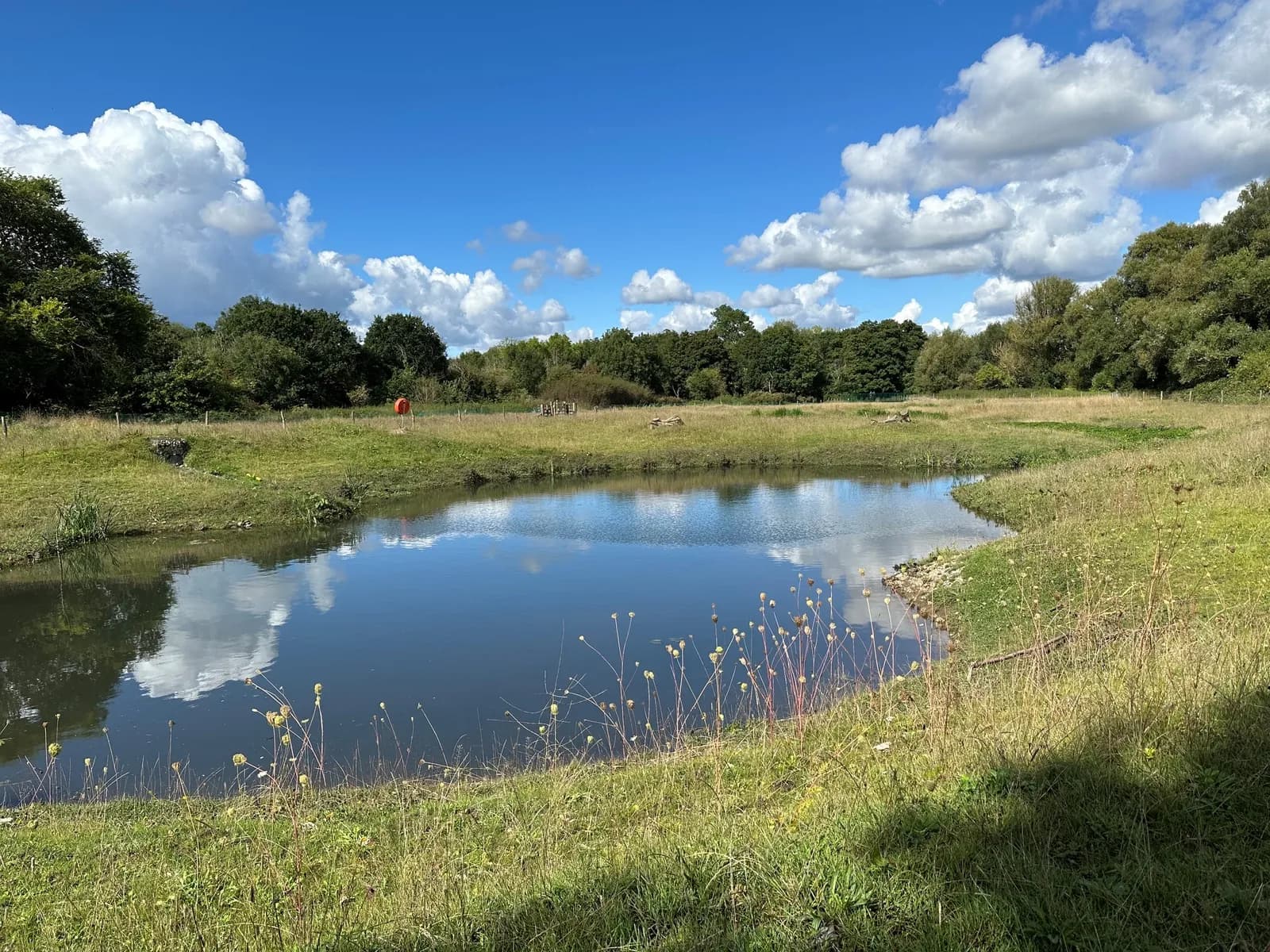
In 1618, a Surrey farmer noticed something peculiar about his cattle. Henry Wicker observed that his cows refused to drink from a particular spring on Epsom Common, half a mile west of the town. That simple observation would transform a quiet village into one of England's most celebrated spa destinations, and give the world a household name that persists more than four centuries later.
The Bitter Spring That Started It All
The water that the cattle shunned had a distinctive bitter taste. When Wicker investigated, he found a slow spring seeping from the ground where the permeable chalk of the North Downs meets the impermeable London Clay. Local people had already noted the area's unusual properties; by 1603, physicians were documenting that the water contained what they called "bitter purging salt." Bathing in ponds to the west of the town centre during late Elizabethan times was already thought to cure ulcers and other disorders.
Yet it was Wicker's well, dug in 1618 on the common, that marked the formal beginning of Epsom's spa era. The water's purgative effects were impossible to ignore. By 1621, the spring had been enclosed with a wall and a shed erected for invalids seeking relief. The village was becoming Epsom Spa.
From Folk Remedy to Fashionable Destination
Word spread quickly. In 1629, Abram Booth of the Dutch East India Company wrote the first authentic account of the spa, describing the water's dramatic effects on those who drank it. By the mid-17th century, Epsom Water was drawing visitors from as far away as continental Europe.
The town's transformation accelerated in the 1690s under John Parkhurst, Lord of the Manor of Epsom. Assembly Rooms were constructed in the High Street in 1692, and apothecary John Livingstone opened bowling greens, gaming rooms, and a ballroom to entertain visitors between treatments. A regular coach service from London began operating in 1684, making the journey accessible to the capital's growing middle class.
Royal patronage cemented Epsom's status. Charles II visited regularly after the Restoration, and it was at Epsom that he met Nell Gwyn. Prince George of Denmark, consort to Queen Anne, also took the waters. The diarist Samuel Pepys recorded his visits in 1663 and 1667. John Aubrey, writing in 1654, described boiling the water and observing "flakey" sediment "the colour of bay-salt." The traveller Celia Fiennes noted that the spring was "not a quick spring" and was often "drank dry" by eager visitors.
The Scientist Who Put Epsom on the Map
While visitors flocked to drink and bathe, the scientific understanding of Epsom's waters remained incomplete. That changed in 1697, when Dr. Nehemiah Grew published his "Nature and Use of the Salt contained in Epsom and such other Waters." Grew, a plant anatomist and physician who served as secretary to the Royal Society, provided the first systematic scientific analysis of the mineral.
Grew established that the water was rich in magnesium sulphate, accounting for its bitter taste and purgative properties. The compound, MgSO₄·7H₂O, would eventually be known internationally as Epsom salts, or by its mineral name, epsomite. Grew's work transformed the spring water from a folk remedy into a recognised medical treatment, and demonstrated how the emerging scientific method could analyse and verify traditional knowledge.
The Rise and Decline of a Spa Town
Epsom's spa era was intense but relatively brief. By the mid-1720s, the town's popularity declined rapidly. The economic fallout from the South Sea Bubble collapse reduced disposable income among potential visitors, while competition from established spa towns such as Bath and Tunbridge Wells drew the fashionable crowd elsewhere.
By the 1750s, synthetic Epsom salts were being manufactured commercially, removing the need to visit the original source. Attempts to revive the spa in the 1760s proved unsuccessful. The wells that had once drawn royalty and diarists fell into disuse.
A Name That Travelled the World
Yet while the spa closed, the name endured. Today, Epsom salts remain a staple in pharmacies and supermarkets worldwide. The compound is used for everything from relieving muscle soreness to garden fertiliser, from cosmetic applications to industrial processes. The name itself, "Epsom salts," bears witness to the town where a farmer's observation in a cow pasture started a global phenomenon.
The discovery story, with its elements of serendipity and practical observation, has become a classic example of how everyday attention to detail can yield significant scientific and commercial outcomes. What Henry Wicker noticed about his cattle in 1618 continues to resonate in medicine cabinets and garden sheds across the world, a quiet testament to Epsom's place in the history of science and commerce.