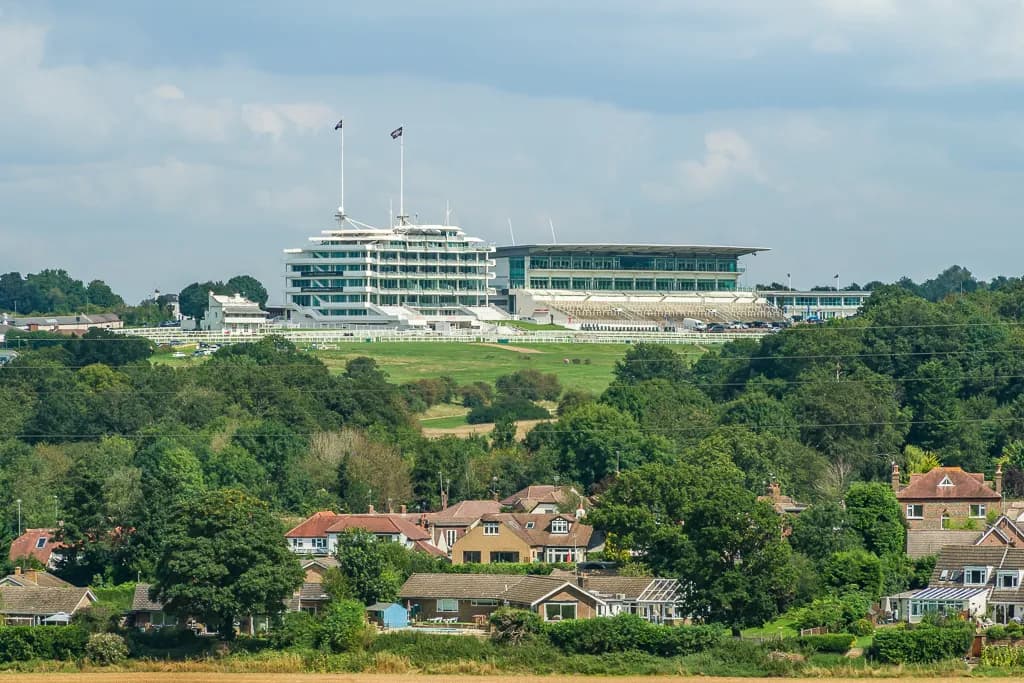
Epsom Downs Racecourse stands as one of the most iconic sporting venues in Britain, drawing visitors from across the nation each June for the world-famous Derby. The course sits atop the North Downs, offering views across Surrey while playing host to a racing tradition that stretches back more than two centuries.
The History of the Derby
The Epsom Derby was first run in 1780, making it one of the oldest and most prestigious flat races in the world. The 12th Earl of Derby, Edward Stanley, is credited with establishing the race, which takes its name from his title. The original course was laid out by his steward, and the race quickly became a fixture of the British social and sporting calendar.
The Derby is run over one mile, four furlongs and 10 yards on a distinctive left-handed track that features significant gradients. The course rises and falls over undulating terrain, testing both the stamina and agility of competing horses. This challenging layout has earned Epsom a reputation as a true test of thoroughbred ability.
The Racecourse Today
Epsom Downs Racecourse operates throughout the flat racing season, hosting fixtures from spring through autumn. While the Derby in early June remains the highlight, the course stages numerous other meetings, including the Oaks, which is run for fillies on the same card as the Derby.
The venue offers various hospitality options, from general admission areas with views across the Downs to more exclusive enclosures. Spectators can walk much of the course perimeter on race days, a feature that distinguishes Epsom from many modern racing venues. The open nature of the Downs means that thousands gather on the infield and surrounding hills to watch the action without entering the paid enclosures.
Public Access and Local Use
Beyond racing, Epsom Downs remains publicly accessible land. The area forms part of the larger downland landscape that includes Walton Downs, and the public has long enjoyed rights of way across much of the terrain. Dog walkers, runners, and casual visitors use the Downs year-round, though race days bring restrictions to certain areas.
The chalk grassland habitat supports various wildlife species, and the open landscape preserves a sense of rural character despite Epsom's proximity to London. The town centre lies just a short distance from the Downs, connected by roads that climb steadily toward the racecourse plateau.
Transport Links
Epsom Station provides regular rail services to London Victoria and London Waterloo, with journey times of approximately 35 to 40 minutes. Tattenham Corner Station, located on the eastern side of the Downs, opens specifically on race days to accommodate Derby crowds. Bus services connect the town centre to the racecourse, though many visitors choose to walk the final stretch on race days, adding to the occasion's atmosphere.
Local Economy and Heritage
The racing industry contributes significantly to Epsom's local economy, supporting hospitality businesses, transport services, and retail in the town centre. The Derby remains a major cultural event, attracting television audiences in the millions and international visitors to the area.
The town's connection to racing extends beyond the Downs themselves. Training facilities, stables, and related businesses operate throughout the Epsom and Ewell borough, maintaining a link to equine heritage that predates the modern racing industry. The surrounding area retains a distinctly horsey character, with gallops visible from nearby roads and bridle paths crisscrossing the downland.